Tell us about the job
Takes about a minute. No obligation.
A contractor quoting a heat pump repair in Wood County has to account for what the system has already been through before they can say whether a failed part gave out from age, installation, or the load placed on it by the area's weather. 118 severe weather events were recorded in Wood County, Wisconsin between 2015 and 2024. At that rate, severe weather is a standing condition in this county, not an occasional event, and components that manage heating and cooling mode switching carry that history in how they wear. A refrigerant leak or a compressor running outside its pressure range may trace back to cumulative stress rather than a single bad season or a manufacturing defect.
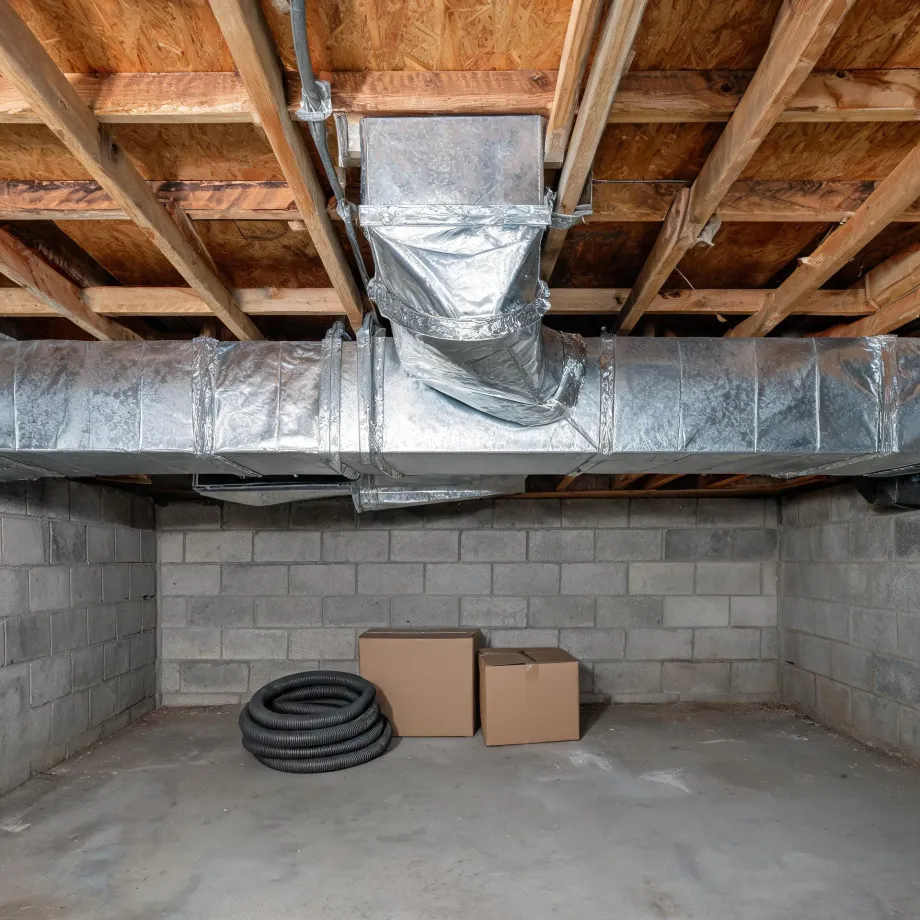
Ductwork in a house this old was built around a different system, and whatever has run in it since has logged its own years on top of that. Half the homes in Wood County, Wisconsin were built in 1972 or earlier (2020-2024 ACS 5-year). A contractor opening a heat pump in stock of this vintage is often looking at a unit that has been doing the work long enough that wear shows in the refrigerant circuit, the reversing valve, and the coils. The repair pivots on whether the parts that unit takes are still manufactured, because a system old enough to match this housing rarely shares a parts shelf with current models.
The Parts of a Heat Pump a Contractor Checks First
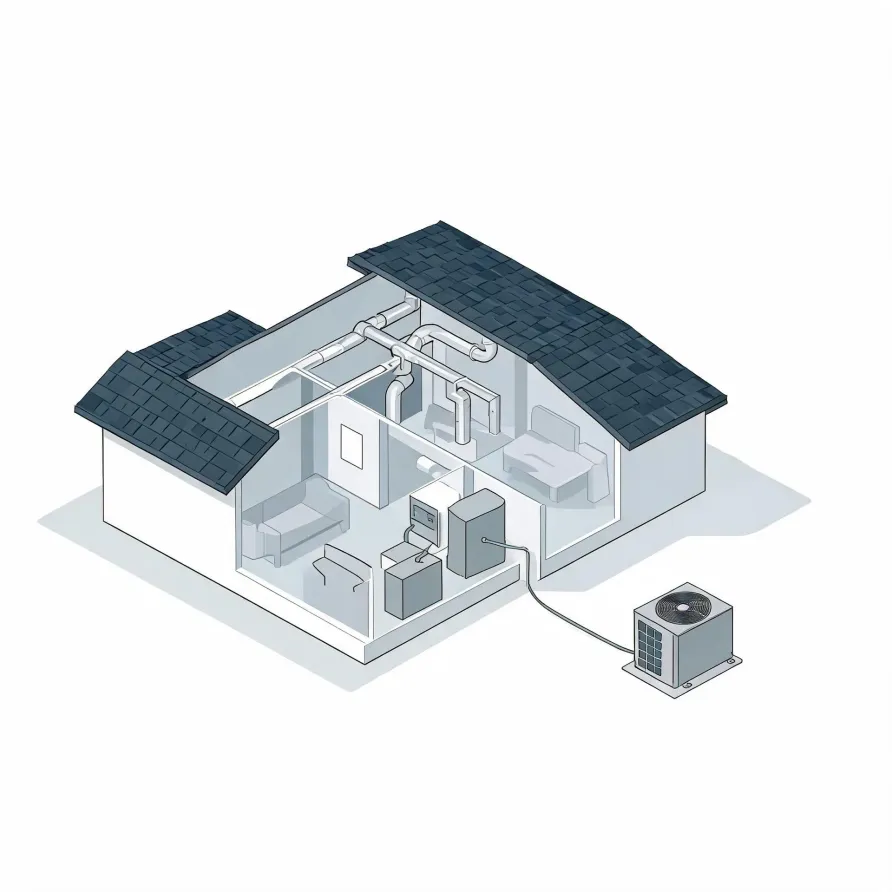
The outdoor unit is the piece most homeowners recognize on sight. It sits outside on a pad or bracket and contains the compressor and the condenser coil. The compressor is the part a contractor looks at early because when it fails, the whole system stops moving heat in either direction. The condenser coil picks up faults too, often from physical damage or corrosion.
Inside the house, the air handler holds the evaporator coil, the blower motor, and the expansion valve. Each one has a distinct failure pattern: a frozen coil, a motor that runs but moves little air, a valve that sticks. Connecting the two units are the refrigerant lines, and the reversing valve inside the system is what lets a heat pump heat in winter and cool in summer. A stuck reversing valve is a common reason a system blows the wrong temperature.
The drawing shows the general layout of a heat pump system, and a licensed contractor determines which components apply and what needs attention in your specific home.
Get matched in Wood CountyWood County, Wisconsin, by the numbers
118 severe weather events were recorded in Wood County, Wisconsin between 2015 and 2024.
NOAA National Centers for Environmental Information, Storm Events Database, bulk CSV export, events 2015-01-01 through 2024-12-31.Half the homes in Wood County, Wisconsin were built in 1972 or earlier (2020-2024 ACS 5-year).
U.S. Census Bureau, 2020-2024 American Community Survey 5-Year EstimatesWood County, Wisconsin holds 34,755 housing units (2020-2024 ACS 5-year).
U.S. Census Bureau, 2020-2024 American Community Survey 5-Year EstimatesOwners occupy 72.6% of the occupied homes in Wood County, Wisconsin (2020-2024 ACS 5-year).
U.S. Census Bureau, 2020-2024 American Community Survey 5-Year EstimatesRepair Rules for Heat Pumps in Wood County, Wisconsin2 sourced rules and standards
Licensing Rules for HVAC Repair in Wood County, Wisconsin
A Wisconsin business that employs a certified HVAC qualifier is a certified HVAC business, and no city or county may require it to hold a local certification or licence on top of that.
Wisconsin requires a state HVAC contractor registration: no person or business may install or service heating, ventilating or air conditioning equipment, or offer to, without one.
Severe Weather Events in Wood County
Heating and cooling equipment in Wood County works against whatever the local climate throws at it, and storm activity is part of that load. A heat pump running hard through weather extremes accumulates wear at a different rate than one in a mild location, which is why local conditions belong in any honest picture of repair demand.
118 severe weather events, 2015–2024. Source: NOAA National Centers for Environmental Information, Storm Events Database.